Blog

  • The Solidarity Snack: How Philanthropy Fuels Korea’s ‘Sharing’ Culture

    The Solidarity Snack: How Philanthropy Fuels Korea’s ‘Sharing’ Culture

    Food is never just about calories; it’s about Jeong (정). If you’ve ever dipped into Korean culture, you know that word is notoriously hard to translate. It’s a mix of deep affection, social bonding, and that warm, fuzzy feeling of looking out for one another.

    The recent news of Acme Markets donating $50,000 to the Food Bank of Delaware might seem like a local business headline, but to a K-food lover, it resonates with a massive cultural shift happening half a world away. We’re seeing a global rise in Chakhan Sobi (착한 소비), or “Ethical Consumption,” where your snack choice actually does some good for the world.

    The Heart of the Convenience Store

    In Korea, convenience stores like CU and GS25 aren’t just places to grab a late-night Samgyeopsal kimbap. They have become the front lines of food security. Much like Acme’s donation supports local families, these giants have built massive networks with national food banks.

    But here’s the cool part: it’s not just corporate suits writing checks. It’s baked into the convenience store meal hacks you see going viral on TikTok and Reels.

    From ‘Meal Hacks’ to ‘Helping Hands’

    Have you seen those “Mark Meals” or the 1,000-won “Economy Urban Boxes”? While these started as ways for students to eat deliciously on a budget, they’ve morphed into a movement. Influencers aren’t just showing you how to mix Buldark ramen with string cheese anymore; they are highlighting “Buy One, Give One” campaigns.

    When you buy certain branded items in a Korean convenience store, a portion of that price—or an identical item—is automatically diverted to a “Hope Box” for youth facing food insecurity. It turns a simple lunch into an act of solidarity. It’s the ultimate “Solidarity Snack.”

    Why We Love It

    People are obsessed with this because it removes the “pity” from charity and replaces it with “Jeong.” By making ethical consumption trendy and delicious, it bridges the gap between those who have plenty and those who are struggling. Whether it’s a $50,000 check from a supermarket chain in Delaware or a 500-won donation from a kimbap purchase in Seoul, the message is the same: No one eats alone.

    So, the next time you see a major donation or a “charity-linked” snack, remember—you aren’t just filling a stomach; you’re fueling a culture of care.

    연대하는 간식: 사회공헌이 한국의 ‘나눔’ 문화를 키우는 법

    음식은 단순히 칼로리를 섭취하는 수단이 아닙니다. 바로 ‘정(情)’에 관한 것이죠. 한국 문화를 조금이라도 접해본 분이라면 ‘정’이라는 단어를 번역하기가 얼마나 까다로운지 아실 겁니다. 깊은 애정, 사회적 유대감, 그리고 서로를 보살피는 따뜻하고 몽글몽글한 마음이 뒤섞인 감정이죠.

    최근 애크미 마켓(Acme Markets)이 델라웨어 푸드뱅크에 5만 달러를 기부했다는 소식은 얼핏 평범한 지역 뉴스처럼 보일 수 있습니다. 하지만 K-푸드를 사랑하는 이들에게 이 소식은 지구 반대편에서 일어나고 있는 거대한 문화적 흐름과 맞닿아 있습니다. 바로 내가 고른 간식 하나가 세상을 더 좋게 만드는 ‘착한 소비’의 세계적인 확산입니다.

    편의점, 그 중심에 있는 따뜻한 마음

    한국에서 CU나 GS25 같은 편의점은 단순히 밤늦게 삼겹살 김밥을 사러 가는 곳이 아닙니다. 이곳은 이제 식량 안보의 최전선이 되었습니다. 애크미의 기부금이 지역 가정을 돕는 것처럼, 한국의 유통 공룡들은 전국 푸드뱅크와 거대한 네트워크를 구축했습니다.

    하지만 정말 멋진 점은 단순히 기업 차원의 기부금 전달에 그치지 않는다는 것입니다. 우리가 틱톡이나 릴스에서 흔히 보는 ‘편의점 꿀조합 레시피’ 문화 속에 이 나눔이 녹아들어 있습니다.

    ‘꿀조합’ 레시피에서 ‘나눔의 손길’로

    ‘마크정식’이나 ‘1,000원 대박 도시락’ 같은 메뉴를 보신 적 있나요? 처음엔 학생들이 적은 돈으로 맛있게 먹기 위해 시작된 이 문화는 이제 하나의 운동으로 변모했습니다. 인플루언서들은 이제 불닭볶음면에 스트링 치즈를 섞는 법만 가르쳐주지 않습니다. 그들은 “하나 사면 하나 기부되는” 캠페인을 앞다투어 소개하죠.

    한국 편의점에서 특정 상품을 구매하면 수익금의 일부나 동일한 제품이 결식아동을 위한 ‘희망 박스’로 자동 전달됩니다. 소박한 점심 한 끼가 연대의 행위로 변하는 순간이죠. 이것이 바로 진정한 ‘연대하는 간식’ 아닐까요?

    우리가 이 문화에 열광하는 이유
    다음에 대규모 기부 소식이나 ‘기부 연계형’ 간식을 보게 된다면 기억하세요. 당신은 단순히 배를 채우는 것이 아니라, 서로를 돌보
    사람들이 이 트렌드에 열광하는 이유는 ‘자선’에서 ‘동정’을 빼고 그 자리에 ‘정’을 채웠기 때문입니다. 착한 소비를 트렌디하고 맛있게 만들면서, 넉넉한 이들과 어려움을 겪는 이들 사이의 간극을 좁혀줍니다. 델라웨어 슈퍼마켓 체인의 5만 달러 수표든, 서울 편의점 김밥 구매로 이어지는 500원의 기부든 메시지는 동일합니다. “아무도 혼자 밥 먹게 두지 않겠다”는 것이죠.
    는 문화를 응원하고 있다는 사실을요.

  • The Soul in the Stone Pot: Centuries of Fire and Fermentation

    The Soul in the Stone Pot: Centuries of Fire and Fermentation

    If you’ve ever sat down at a Korean table, you’ve felt it before you even took a bite. It’s that deep, savory steam rising from a bubbling stone pot (dolsot), carrying a scent that is both ancient and inviting. To the uninitiated, it’s just a meal. To a Korean, it’s a bowl full of Jeong (정)—that uniquely Korean flavor of soulful connection and communal affection.

    The Art of the Long Game

    The story of K-food doesn’t begin in a modern kitchen; it begins in the earth. Centuries ago, during the brutal, bone-chilling winters of the peninsula, survival wasn’t a choice—it was an art form. This necessity gave birth to Korea’s true culinary superpower: fermentation.

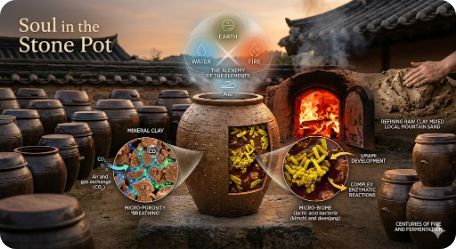
    While the rest of the world was looking for ways to keep food fresh, Koreans were learning how to make it age. By tucking soybeans, peppers, and vegetables into breathable clay jars called Onggi, they invited the elements to transform simple ingredients into “liquid gold”—Ganjang (soy sauce), Doenjang (soybean paste), and Gochujang (chili paste). These aren’t just condiments; they are the DNA of the Korean palate.

    From Royal Banquets to Village Fires

    What makes Korean food so fascinating is its “dual-soul.” On one hand, you have the refined, colorful elegance of Royal Court Cuisine (Gungjung Eumsik), where every ingredient was chosen for harmony and medicinal balance. On the other, you have the raw, hearty energy of the village pot.

    Imagine a communal village hearth. Everyone brings what they have—a handful of mountain herbs, a scoop of fermented paste, a few root vegetables—and tosses them into a single, massive pot. This is the origin of the “stew culture” (Jjigae) we love today. It wasn’t just about sharing calories; it was about sharing warmth and life. When we say a stew tastes “deep,” we aren’t just talking about the fermentation; we’re talking about the centuries of communal survival stirred into the broth.

    Why We’re Still Obsessed

    Today, K-food is a global phenomenon, but its heart remains in that bubbling stone pot. Whether it’s a spicy Kimchi-jjigae or a funky Doenjang-jjigae, these dishes offer a sense of grounding. In a fast-paced world, the “slow food” philosophy of our ancestors reminds us to slow down.

    When you share a meal in Korea, the pot is often placed right in the center. We reach in together, spoons clinking, steam rising between us. That’s Jeong. It’s the realization that no matter how much the world changes, the most profound flavors are the ones that took months—or centuries—to perfect.

    돌솥에 담긴 영혼: 불과 발효의 수백 년 역사

    한국인의 식탁에 앉아본 적이 있다면, 첫 술을 뜨기도 전에 이미 그 기운을 느껴보셨을 겁니다. 보글보글 끓어오르는 돌솥에서 피어오르는 그 진하고 구수한 김은, 아주 오래된 듯하면서도 포근하게 우리를 반겨주죠. 처음 접하는 사람에게는 그저 한 끼 식사일지 모르지만, 한국인에게 그것은 ‘정(情)’—한국 특유의 끈끈한 유대감과 마음이 담긴 한 그릇입니다.

    기다림이 빚어낸 예술

    K-푸드의 이야기는 현대적인 주방이 아니라, 땅속에서 시작되었습니다. 수백 년 전, 한반도의 살을 에듯 추운 겨울을 나기 위해 생존은 선택이 아닌 예술이 되어야 했죠. 이러한 절박함은 한국 요리의 진정한 슈퍼파워인 ‘발효’를 탄생시켰습니다.

    전 세계가 음식을 ‘신선하게’ 유지할 방법을 찾을 때, 한국인들은 음식을 ‘나이 들게’ 만드는 법을 배웠습니다. 콩, 고추, 채소를 숨 쉬는 항아리인 ‘옹기’에 담아 자연의 흐름에 맡겼고, 이는 곧 ‘액체 황금’이라 불리는 간장, 된장, 고추장으로 재탄생했습니다. 이것들은 단순한 양념이 아니라 한국인의 입맛을 구성하는 DNA 그 자체입니다.

    궁중 잔치에서 마을의 화로까지

    한국 음식의 매력은 그 ‘이중적인 영혼’에 있습니다. 한편에는 모든 식재료가 조화와 약동학적 균형을 이루는 정갈하고 화려한 ‘궁중 음식’이 있고, 다른 한편에는 마을 공동체 화로에서 피어나는 투박하고 활기찬 에너지가 있습니다.

    마을 사람들이 각자 가져온 산나물 한 줌, 장 한 국자, 뿌리 채소 몇 개를 커다란 가마솥에 함께 넣고 끓이는 모습을 상상해 보세요. 이것이 오늘날 우리가 사랑하는 ‘찌개 문화’의 기원입니다. 단순히 칼로리를 나누는 것이 아니라, 온기와 삶을 나누는 과정이었죠. 우리가 찌개 맛이 ‘깊다’고 말할 때, 그것은 단지 발효의 맛만을 뜻하는 게 아닙니다. 그 국물 속에 녹아든 수백 년간의 공동체적 생존의 역사를 말하는 것이죠.

    우리가 여전히 열광하는 이유

    오늘날 K-푸드는 세계적인 현상이 되었지만, 그 심장은 여전히 보글보글 끓는 돌솥 안에 있습니다. 매콤한 김치찌개든, 구수한 된장찌개든, 이 요리들은 우리에게 정서적 안정감을 줍니다. 빠르게 돌아가는 세상 속에서, 조상들이 남긴 ‘슬로우 푸드’ 철학은 우리에게 잠시 멈춰 서라고 말해줍니다.

    한국에서 식사할 때 찌개는 보통 식탁 한가운데에 놓입니다. 숟가락이 부딪히는 소리, 우리 사이로 피어오르는 김. 그것이 바로 ‘정’입니다. 세상이 아무리 변해도, 가장 깊은 맛은 완성되기까지 수개월, 혹은 수백 년이 걸린다는 사실을 우리는 그 돌솥 안에서 깨닫게 됩니다.

  • The Soul in the Stone Pot: Centuries of Fire and Fermentation

    The Soul in the Stone Pot: Centuries of Fire and Fermentation

    If you’ve ever sat down at a Korean table, you’ve felt it before you even took a bite. It’s that deep, savory steam rising from a bubbling stone pot (dolsot), carrying a scent that is both ancient and inviting. To the uninitiated, it’s just a meal. To a Korean, it’s a bowl full of Jeong (정)—that uniquely Korean flavor of soulful connection and communal affection.

    The Art of the Long Game

    The story of K-food doesn’t begin in a modern kitchen; it begins in the earth. Centuries ago, during the brutal, bone-chilling winters of the peninsula, survival wasn’t a choice—it was an art form. This necessity gave birth to Korea’s true culinary superpower: fermentation.

    While the rest of the world was looking for ways to keep food fresh, Koreans were learning how to make it age. By tucking soybeans, peppers, and vegetables into breathable clay jars called Onggi, they invited the elements to transform simple ingredients into “liquid gold”—Ganjang (soy sauce), Doenjang (soybean paste), and Gochujang (chili paste). These aren’t just condiments; they are the DNA of the Korean palate.

    From Royal Banquets to Village Fires

    What makes Korean food so fascinating is its “dual-soul.” On one hand, you have the refined, colorful elegance of Royal Court Cuisine (Gungjung Eumsik), where every ingredient was chosen for harmony and medicinal balance. On the other, you have the raw, hearty energy of the village pot.

    Imagine a communal village hearth. Everyone brings what they have—a handful of mountain herbs, a scoop of fermented paste, a few root vegetables—and tosses them into a single, massive pot. This is the origin of the “stew culture” (Jjigae) we love today. It wasn’t just about sharing calories; it was about sharing warmth and life. When we say a stew tastes “deep,” we aren’t just talking about the fermentation; we’re talking about the centuries of communal survival stirred into the broth.

    Why We’re Still Obsessed

    Today, K-food is a global phenomenon, but its heart remains in that bubbling stone pot. Whether it’s a spicy Kimchi-jjigae or a funky Doenjang-jjigae, these dishes offer a sense of grounding. In a fast-paced world, the “slow food” philosophy of our ancestors reminds us to slow down.

    When you share a meal in Korea, the pot is often placed right in the center. We reach in together, spoons clinking, steam rising between us. That’s Jeong. It’s the realization that no matter how much the world changes, the most profound flavors are the ones that took months—or centuries—to perfect.

    돌솥에 담긴 영혼: 불과 발효의 수백 년 역사

    한국인의 식탁에 앉아본 적이 있다면, 첫 술을 뜨기도 전에 이미 그 기운을 느껴보셨을 겁니다. 보글보글 끓어오르는 돌솥에서 피어오르는 그 진하고 구수한 김은, 아주 오래된 듯하면서도 포근하게 우리를 반겨주죠. 처음 접하는 사람에게는 그저 한 끼 식사일지 모르지만, 한국인에게 그것은 ‘정(情)’—한국 특유의 끈끈한 유대감과 마음이 담긴 한 그릇입니다.

    기다림이 빚어낸 예술

    K-푸드의 이야기는 현대적인 주방이 아니라, 땅속에서 시작되었습니다. 수백 년 전, 한반도의 살을 에듯 추운 겨울을 나기 위해 생존은 선택이 아닌 예술이 되어야 했죠. 이러한 절박함은 한국 요리의 진정한 슈퍼파워인 ‘발효’를 탄생시켰습니다.

    전 세계가 음식을 ‘신선하게’ 유지할 방법을 찾을 때, 한국인들은 음식을 ‘나이 들게’ 만드는 법을 배웠습니다. 콩, 고추, 채소를 숨 쉬는 항아리인 ‘옹기’에 담아 자연의 흐름에 맡겼고, 이는 곧 ‘액체 황금’이라 불리는 간장, 된장, 고추장으로 재탄생했습니다. 이것들은 단순한 양념이 아니라 한국인의 입맛을 구성하는 DNA 그 자체입니다.

    궁중 잔치에서 마을의 화로까지

    한국 음식의 매력은 그 ‘이중적인 영혼’에 있습니다. 한편에는 모든 식재료가 조화와 약동학적 균형을 이루는 정갈하고 화려한 ‘궁중 음식’이 있고, 다른 한편에는 마을 공동체 화로에서 피어나는 투박하고 활기찬 에너지가 있습니다.

    마을 사람들이 각자 가져온 산나물 한 줌, 장 한 국자, 뿌리 채소 몇 개를 커다란 가마솥에 함께 넣고 끓이는 모습을 상상해 보세요. 이것이 오늘날 우리가 사랑하는 ‘찌개 문화’의 기원입니다. 단순히 칼로리를 나누는 것이 아니라, 온기와 삶을 나누는 과정이었죠. 우리가 찌개 맛이 ‘깊다’고 말할 때, 그것은 단지 발효의 맛만을 뜻하는 게 아닙니다. 그 국물 속에 녹아든 수백 년간의 공동체적 생존의 역사를 말하는 것이죠.

    우리가 여전히 열광하는 이유

    오늘날 K-푸드는 세계적인 현상이 되었지만, 그 심장은 여전히 보글보글 끓는 돌솥 안에 있습니다. 매콤한 김치찌개든, 구수한 된장찌개든, 이 요리들은 우리에게 정서적 안정감을 줍니다. 빠르게 돌아가는 세상 속에서, 조상들이 남긴 ‘슬로우 푸드’ 철학은 우리에게 잠시 멈춰 서라고 말해줍니다.

    한국에서 식사할 때 찌개는 보통 식탁 한가운데에 놓입니다. 숟가락이 부딪히는 소리, 우리 사이로 피어오르는 김. 그것이 바로 ‘정’입니다. 세상이 아무리 변해도, 가장 깊은 맛은 완성되기까지 수개월, 혹은 수백 년이 걸린다는 사실을 우리는 그 돌솥 안에서 깨닫게 됩니다.

  • The Solidarity Snack: How Philanthropy Fuels Korea’s ‘Sharing’ Culture

    The Solidarity Snack: How Philanthropy Fuels Korea’s ‘Sharing’ Culture

    Food is never just about calories; it’s about Jeong (정). If you’ve ever dipped into Korean culture, you know that word is notoriously hard to translate. It’s a mix of deep affection, social bonding, and that warm, fuzzy feeling of looking out for one another.

    The recent news of Acme Markets donating $50,000 to the Food Bank of Delaware might seem like a local business headline, but to a K-food lover, it resonates with a massive cultural shift happening half a world away. We’re seeing a global rise in Chakhan Sobi (착한 소비), or “Ethical Consumption,” where your snack choice actually does some good for the world.

    The Heart of the Convenience Store

    In Korea, convenience stores like CU and GS25 aren’t just places to grab a late-night Samgyeopsal kimbap. They have become the front lines of food security. Much like Acme’s donation supports local families, these giants have built massive networks with national food banks.

    But here’s the cool part: it’s not just corporate suits writing checks. It’s baked into the convenience store meal hacks you see going viral on TikTok and Reels.

    From ‘Meal Hacks’ to ‘Helping Hands’

    Have you seen those “Mark Meals” or the 1,000-won “Economy Urban Boxes”? While these started as ways for students to eat deliciously on a budget, they’ve morphed into a movement. Influencers aren’t just showing you how to mix Buldark ramen with string cheese anymore; they are highlighting “Buy One, Give One” campaigns.

    When you buy certain branded items in a Korean convenience store, a portion of that price—or an identical item—is automatically diverted to a “Hope Box” for youth facing food insecurity. It turns a simple lunch into an act of solidarity. It’s the ultimate “Solidarity Snack.”

    Why We Love It

    People are obsessed with this because it removes the “pity” from charity and replaces it with “Jeong.” By making ethical consumption trendy and delicious, it bridges the gap between those who have plenty and those who are struggling. Whether it’s a $50,000 check from a supermarket chain in Delaware or a 500-won donation from a kimbap purchase in Seoul, the message is the same: No one eats alone.

    So, the next time you see a major donation or a “charity-linked” snack, remember—you aren’t just filling a stomach; you’re fueling a culture of care.

    연대하는 간식: 사회공헌이 한국의 ‘나눔’ 문화를 키우는 법

    음식은 단순히 칼로리를 섭취하는 수단이 아닙니다. 바로 ‘정(情)’에 관한 것이죠. 한국 문화를 조금이라도 접해본 분이라면 ‘정’이라는 단어를 번역하기가 얼마나 까다로운지 아실 겁니다. 깊은 애정, 사회적 유대감, 그리고 서로를 보살피는 따뜻하고 몽글몽글한 마음이 뒤섞인 감정이죠.

    최근 애크미 마켓(Acme Markets)이 델라웨어 푸드뱅크에 5만 달러를 기부했다는 소식은 얼핏 평범한 지역 뉴스처럼 보일 수 있습니다. 하지만 K-푸드를 사랑하는 이들에게 이 소식은 지구 반대편에서 일어나고 있는 거대한 문화적 흐름과 맞닿아 있습니다. 바로 내가 고른 간식 하나가 세상을 더 좋게 만드는 ‘착한 소비’의 세계적인 확산입니다.

    편의점, 그 중심에 있는 따뜻한 마음

    한국에서 CU나 GS25 같은 편의점은 단순히 밤늦게 삼겹살 김밥을 사러 가는 곳이 아닙니다. 이곳은 이제 식량 안보의 최전선이 되었습니다. 애크미의 기부금이 지역 가정을 돕는 것처럼, 한국의 유통 공룡들은 전국 푸드뱅크와 거대한 네트워크를 구축했습니다.

    하지만 정말 멋진 점은 단순히 기업 차원의 기부금 전달에 그치지 않는다는 것입니다. 우리가 틱톡이나 릴스에서 흔히 보는 ‘편의점 꿀조합 레시피’ 문화 속에 이 나눔이 녹아들어 있습니다.

    ‘꿀조합’ 레시피에서 ‘나눔의 손길’로

    ‘마크정식’이나 ‘1,000원 대박 도시락’ 같은 메뉴를 보신 적 있나요? 처음엔 학생들이 적은 돈으로 맛있게 먹기 위해 시작된 이 문화는 이제 하나의 운동으로 변모했습니다. 인플루언서들은 이제 불닭볶음면에 스트링 치즈를 섞는 법만 가르쳐주지 않습니다. 그들은 “하나 사면 하나 기부되는” 캠페인을 앞다투어 소개하죠.

    한국 편의점에서 특정 상품을 구매하면 수익금의 일부나 동일한 제품이 결식아동을 위한 ‘희망 박스’로 자동 전달됩니다. 소박한 점심 한 끼가 연대의 행위로 변하는 순간이죠. 이것이 바로 진정한 ‘연대하는 간식’ 아닐까요?

    우리가 이 문화에 열광하는 이유

    사람들이 이 트렌드에 열광하는 이유는 ‘자선’에서 ‘동정’을 빼고 그 자리에 ‘정’을 채웠기 때문입니다. 착한 소비를 트렌디하고 맛있게 만들면서, 넉넉한 이들과 어려움을 겪는 이들 사이의 간극을 좁혀줍니다. 델라웨어 슈퍼마켓 체인의 5만 달러 수표든, 서울 편의점 김밥 구매로 이어지는 500원의 기부든 메시지는 동일합니다. “아무도 혼자 밥 먹게 두지 않겠다”는 것이죠.

    다음에 대규모 기부 소식이나 ‘기부 연계형’ 간식을 보게 된다면 기억하세요. 당신은 단순히 배를 채우는 것이 아니라, 서로를 돌보는 문화를 응원하고 있다는 사실을요.

  • The Soul in the Stone Pot: Centuries of Fire and Fermentation

    The Soul in the Stone Pot: Centuries of Fire and Fermentation

    If you’ve ever sat down at a Korean table, you’ve felt it before you even took a bite. It’s that deep, savory steam rising from a bubbling stone pot (dolsot), carrying a scent that is both ancient and inviting. To the uninitiated, it’s just a meal. To a Korean, it’s a bowl full of Jeong (정)—that uniquely Korean flavor of soulful connection and communal affection.

    The Art of the Long Game

    The story of K-food doesn’t begin in a modern kitchen; it begins in the earth. Centuries ago, during the brutal, bone-chilling winters of the peninsula, survival wasn’t a choice—it was an art form. This necessity gave birth to Korea’s true culinary superpower: fermentation.

    While the rest of the world was looking for ways to keep food fresh, Koreans were learning how to make it age. By tucking soybeans, peppers, and vegetables into breathable clay jars called Onggi, they invited the elements to transform simple ingredients into “liquid gold”—Ganjang (soy sauce), Doenjang (soybean paste), and Gochujang (chili paste). These aren’t just condiments; they are the DNA of the Korean palate.

    From Royal Banquets to Village Fires

    What makes Korean food so fascinating is its “dual-soul.” On one hand, you have the refined, colorful elegance of Royal Court Cuisine (Gungjung Eumsik), where every ingredient was chosen for harmony and medicinal balance. On the other, you have the raw, hearty energy of the village pot.

    Imagine a communal village hearth. Everyone brings what they have—a handful of mountain herbs, a scoop of fermented paste, a few root vegetables—and tosses them into a single, massive pot. This is the origin of the “stew culture” (Jjigae) we love today. It wasn’t just about sharing calories; it was about sharing warmth and life. When we say a stew tastes “deep,” we aren’t just talking about the fermentation; we’re talking about the centuries of communal survival stirred into the broth.

    Why We’re Still Obsessed

    Today, K-food is a global phenomenon, but its heart remains in that bubbling stone pot. Whether it’s a spicy Kimchi-jjigae or a funky Doenjang-jjigae, these dishes offer a sense of grounding. In a fast-paced world, the “slow food” philosophy of our ancestors reminds us to slow down.

    When you share a meal in Korea, the pot is often placed right in the center. We reach in together, spoons clinking, steam rising between us. That’s Jeong. It’s the realization that no matter how much the world changes, the most profound flavors are the ones that took months—or centuries—to perfect.

    돌솥에 담긴 영혼: 불과 발효의 수백 년 역사

    한국인의 식탁에 앉아본 적이 있다면, 첫 술을 뜨기도 전에 이미 그 기운을 느껴보셨을 겁니다. 보글보글 끓어오르는 돌솥에서 피어오르는 그 진하고 구수한 김은, 아주 오래된 듯하면서도 포근하게 우리를 반겨주죠. 처음 접하는 사람에게는 그저 한 끼 식사일지 모르지만, 한국인에게 그것은 ‘정(情)’—한국 특유의 끈끈한 유대감과 마음이 담긴 한 그릇입니다.

    기다림이 빚어낸 예술

    K-푸드의 이야기는 현대적인 주방이 아니라, 땅속에서 시작되었습니다. 수백 년 전, 한반도의 살을 에듯 추운 겨울을 나기 위해 생존은 선택이 아닌 예술이 되어야 했죠. 이러한 절박함은 한국 요리의 진정한 슈퍼파워인 ‘발효’를 탄생시켰습니다.

    전 세계가 음식을 ‘신선하게’ 유지할 방법을 찾을 때, 한국인들은 음식을 ‘나이 들게’ 만드는 법을 배웠습니다. 콩, 고추, 채소를 숨 쉬는 항아리인 ‘옹기’에 담아 자연의 흐름에 맡겼고, 이는 곧 ‘액체 황금’이라 불리는 간장, 된장, 고추장으로 재탄생했습니다. 이것들은 단순한 양념이 아니라 한국인의 입맛을 구성하는 DNA 그 자체입니다.

    궁중 잔치에서 마을의 화로까지

    한국 음식의 매력은 그 ‘이중적인 영혼’에 있습니다. 한편에는 모든 식재료가 조화와 약동학적 균형을 이루는 정갈하고 화려한 ‘궁중 음식’이 있고, 다른 한편에는 마을 공동체 화로에서 피어나는 투박하고 활기찬 에너지가 있습니다.

    마을 사람들이 각자 가져온 산나물 한 줌, 장 한 국자, 뿌리 채소 몇 개를 커다란 가마솥에 함께 넣고 끓이는 모습을 상상해 보세요. 이것이 오늘날 우리가 사랑하는 ‘찌개 문화’의 기원입니다. 단순히 칼로리를 나누는 것이 아니라, 온기와 삶을 나누는 과정이었죠. 우리가 찌개 맛이 ‘깊다’고 말할 때, 그것은 단지 발효의 맛만을 뜻하는 게 아닙니다. 그 국물 속에 녹아든 수백 년간의 공동체적 생존의 역사를 말하는 것이죠.

    우리가 여전히 열광하는 이유

    오늘날 K-푸드는 세계적인 현상이 되었지만, 그 심장은 여전히 보글보글 끓는 돌솥 안에 있습니다. 매콤한 김치찌개든, 구수한 된장찌개든, 이 요리들은 우리에게 정서적 안정감을 줍니다. 빠르게 돌아가는 세상 속에서, 조상들이 남긴 ‘슬로우 푸드’ 철학은 우리에게 잠시 멈춰 서라고 말해줍니다.

    한국에서 식사할 때 찌개는 보통 식탁 한가운데에 놓입니다. 숟가락이 부딪히는 소리, 우리 사이로 피어오르는 김. 그것이 바로 ‘정’입니다. 세상이 아무리 변해도, 가장 깊은 맛은 완성되기까지 수개월, 혹은 수백 년이 걸린다는 사실을 우리는 그 돌솥 안에서 깨닫게 됩니다.

  • The Soul in the Stone Pot: Centuries of Fire and Fermentation

    The Soul in the Stone Pot: Centuries of Fire and Fermentation

    If you’ve ever sat down at a Korean table, you’ve felt it before you even took a bite. It’s that deep, savory steam rising from a bubbling stone pot (dolsot), carrying a scent that is both ancient and inviting. To the uninitiated, it’s just a meal. To a Korean, it’s a bowl full of Jeong (정)—that uniquely Korean flavor of soulful connection and communal affection.

    The Art of the Long Game

    The story of K-food doesn’t begin in a modern kitchen; it begins in the earth. Centuries ago, during the brutal, bone-chilling winters of the peninsula, survival wasn’t a choice—it was an art form. This necessity gave birth to Korea’s true culinary superpower: fermentation.

    While the rest of the world was looking for ways to keep food fresh, Koreans were learning how to make it age. By tucking soybeans, peppers, and vegetables into breathable clay jars called Onggi, they invited the elements to transform simple ingredients into “liquid gold”—Ganjang (soy sauce), Doenjang (soybean paste), and Gochujang (chili paste). These aren’t just condiments; they are the DNA of the Korean palate.

    From Royal Banquets to Village Fires

    What makes Korean food so fascinating is its “dual-soul.” On one hand, you have the refined, colorful elegance of Royal Court Cuisine (Gungjung Eumsik), where every ingredient was chosen for harmony and medicinal balance. On the other, you have the raw, hearty energy of the village pot.

    Imagine a communal village hearth. Everyone brings what they have—a handful of mountain herbs, a scoop of fermented paste, a few root vegetables—and tosses them into a single, massive pot. This is the origin of the “stew culture” (Jjigae) we love today. It wasn’t just about sharing calories; it was about sharing warmth and life. When we say a stew tastes “deep,” we aren’t just talking about the fermentation; we’re talking about the centuries of communal survival stirred into the broth.

    Why We’re Still Obsessed

    Today, K-food is a global phenomenon, but its heart remains in that bubbling stone pot. Whether it’s a spicy Kimchi-jjigae or a funky Doenjang-jjigae, these dishes offer a sense of grounding. In a fast-paced world, the “slow food” philosophy of our ancestors reminds us to slow down.

    When you share a meal in Korea, the pot is often placed right in the center. We reach in together, spoons clinking, steam rising between us. That’s Jeong. It’s the realization that no matter how much the world changes, the most profound flavors are the ones that took months—or centuries—to perfect.

    돌솥에 담긴 영혼: 불과 발효의 수백 년 역사

    한국인의 식탁에 앉아본 적이 있다면, 첫 술을 뜨기도 전에 이미 그 기운을 느껴보셨을 겁니다. 보글보글 끓어오르는 돌솥에서 피어오르는 그 진하고 구수한 김은, 아주 오래된 듯하면서도 포근하게 우리를 반겨주죠. 처음 접하는 사람에게는 그저 한 끼 식사일지 모르지만, 한국인에게 그것은 ‘정(情)’—한국 특유의 끈끈한 유대감과 마음이 담긴 한 그릇입니다.

    기다림이 빚어낸 예술

    K-푸드의 이야기는 현대적인 주방이 아니라, 땅속에서 시작되었습니다. 수백 년 전, 한반도의 살을 에듯 추운 겨울을 나기 위해 생존은 선택이 아닌 예술이 되어야 했죠. 이러한 절박함은 한국 요리의 진정한 슈퍼파워인 ‘발효’를 탄생시켰습니다.

    전 세계가 음식을 ‘신선하게’ 유지할 방법을 찾을 때, 한국인들은 음식을 ‘나이 들게’ 만드는 법을 배웠습니다. 콩, 고추, 채소를 숨 쉬는 항아리인 ‘옹기’에 담아 자연의 흐름에 맡겼고, 이는 곧 ‘액체 황금’이라 불리는 간장, 된장, 고추장으로 재탄생했습니다. 이것들은 단순한 양념이 아니라 한국인의 입맛을 구성하는 DNA 그 자체입니다.

    궁중 잔치에서 마을의 화로까지

    한국 음식의 매력은 그 ‘이중적인 영혼’에 있습니다. 한편에는 모든 식재료가 조화와 약동학적 균형을 이루는 정갈하고 화려한 ‘궁중 음식’이 있고, 다른 한편에는 마을 공동체 화로에서 피어나는 투박하고 활기찬 에너지가 있습니다.

    마을 사람들이 각자 가져온 산나물 한 줌, 장 한 국자, 뿌리 채소 몇 개를 커다란 가마솥에 함께 넣고 끓이는 모습을 상상해 보세요. 이것이 오늘날 우리가 사랑하는 ‘찌개 문화’의 기원입니다. 단순히 칼로리를 나누는 것이 아니라, 온기와 삶을 나누는 과정이었죠. 우리가 찌개 맛이 ‘깊다’고 말할 때, 그것은 단지 발효의 맛만을 뜻하는 게 아닙니다. 그 국물 속에 녹아든 수백 년간의 공동체적 생존의 역사를 말하는 것이죠.

    우리가 여전히 열광하는 이유

    오늘날 K-푸드는 세계적인 현상이 되었지만, 그 심장은 여전히 보글보글 끓는 돌솥 안에 있습니다. 매콤한 김치찌개든, 구수한 된장찌개든, 이 요리들은 우리에게 정서적 안정감을 줍니다. 빠르게 돌아가는 세상 속에서, 조상들이 남긴 ‘슬로우 푸드’ 철학은 우리에게 잠시 멈춰 서라고 말해줍니다.

    한국에서 식사할 때 찌개는 보통 식탁 한가운데에 놓입니다. 숟가락이 부딪히는 소리, 우리 사이로 피어오르는 김. 그것이 바로 ‘정’입니다. 세상이 아무리 변해도, 가장 깊은 맛은 완성되기까지 수개월, 혹은 수백 년이 걸린다는 사실을 우리는 그 돌솥 안에서 깨닫게 됩니다.

  • The Soul in the Stone Pot: Centuries of Fire and Fermentation

    The Soul in the Stone Pot: Centuries of Fire and Fermentation

    If you’ve ever sat down at a Korean table, you’ve felt it before you even took a bite. It’s that deep, savory steam rising from a bubbling stone pot (dolsot), carrying a scent that is both ancient and inviting. To the uninitiated, it’s just a meal. To a Korean, it’s a bowl full of Jeong (정)—that uniquely Korean flavor of soulful connection and communal affection.

    The Art of the Long Game

    The story of K-food doesn’t begin in a modern kitchen; it begins in the earth. Centuries ago, during the brutal, bone-chilling winters of the peninsula, survival wasn’t a choice—it was an art form. This necessity gave birth to Korea’s true culinary superpower: fermentation.

    While the rest of the world was looking for ways to keep food fresh, Koreans were learning how to make it age. By tucking soybeans, peppers, and vegetables into breathable clay jars called Onggi, they invited the elements to transform simple ingredients into “liquid gold”—Ganjang (soy sauce), Doenjang (soybean paste), and Gochujang (chili paste). These aren’t just condiments; they are the DNA of the Korean palate.

    From Royal Banquets to Village Fires

    What makes Korean food so fascinating is its “dual-soul.” On one hand, you have the refined, colorful elegance of Royal Court Cuisine (Gungjung Eumsik), where every ingredient was chosen for harmony and medicinal balance. On the other, you have the raw, hearty energy of the village pot.

    Imagine a communal village hearth. Everyone brings what they have—a handful of mountain herbs, a scoop of fermented paste, a few root vegetables—and tosses them into a single, massive pot. This is the origin of the “stew culture” (Jjigae) we love today. It wasn’t just about sharing calories; it was about sharing warmth and life. When we say a stew tastes “deep,” we aren’t just talking about the fermentation; we’re talking about the centuries of communal survival stirred into the broth.

    Why We’re Still Obsessed

    Today, K-food is a global phenomenon, but its heart remains in that bubbling stone pot. Whether it’s a spicy Kimchi-jjigae or a funky Doenjang-jjigae, these dishes offer a sense of grounding. In a fast-paced world, the “slow food” philosophy of our ancestors reminds us to slow down.

    When you share a meal in Korea, the pot is often placed right in the center. We reach in together, spoons clinking, steam rising between us. That’s Jeong. It’s the realization that no matter how much the world changes, the most profound flavors are the ones that took months—or centuries—to perfect.

    돌솥에 담긴 영혼: 불과 발효의 수백 년 역사

    한국인의 식탁에 앉아본 적이 있다면, 첫 술을 뜨기도 전에 이미 그 기운을 느껴보셨을 겁니다. 보글보글 끓어오르는 돌솥에서 피어오르는 그 진하고 구수한 김은, 아주 오래된 듯하면서도 포근하게 우리를 반겨주죠. 처음 접하는 사람에게는 그저 한 끼 식사일지 모르지만, 한국인에게 그것은 ‘정(情)’—한국 특유의 끈끈한 유대감과 마음이 담긴 한 그릇입니다.

    기다림이 빚어낸 예술

    K-푸드의 이야기는 현대적인 주방이 아니라, 땅속에서 시작되었습니다. 수백 년 전, 한반도의 살을 에듯 추운 겨울을 나기 위해 생존은 선택이 아닌 예술이 되어야 했죠. 이러한 절박함은 한국 요리의 진정한 슈퍼파워인 ‘발효’를 탄생시켰습니다.

    전 세계가 음식을 ‘신선하게’ 유지할 방법을 찾을 때, 한국인들은 음식을 ‘나이 들게’ 만드는 법을 배웠습니다. 콩, 고추, 채소를 숨 쉬는 항아리인 ‘옹기’에 담아 자연의 흐름에 맡겼고, 이는 곧 ‘액체 황금’이라 불리는 간장, 된장, 고추장으로 재탄생했습니다. 이것들은 단순한 양념이 아니라 한국인의 입맛을 구성하는 DNA 그 자체입니다.

    궁중 잔치에서 마을의 화로까지

    한국 음식의 매력은 그 ‘이중적인 영혼’에 있습니다. 한편에는 모든 식재료가 조화와 약동학적 균형을 이루는 정갈하고 화려한 ‘궁중 음식’이 있고, 다른 한편에는 마을 공동체 화로에서 피어나는 투박하고 활기찬 에너지가 있습니다.

    마을 사람들이 각자 가져온 산나물 한 줌, 장 한 국자, 뿌리 채소 몇 개를 커다란 가마솥에 함께 넣고 끓이는 모습을 상상해 보세요. 이것이 오늘날 우리가 사랑하는 ‘찌개 문화’의 기원입니다. 단순히 칼로리를 나누는 것이 아니라, 온기와 삶을 나누는 과정이었죠. 우리가 찌개 맛이 ‘깊다’고 말할 때, 그것은 단지 발효의 맛만을 뜻하는 게 아닙니다. 그 국물 속에 녹아든 수백 년간의 공동체적 생존의 역사를 말하는 것이죠.

    우리가 여전히 열광하는 이유

    오늘날 K-푸드는 세계적인 현상이 되었지만, 그 심장은 여전히 보글보글 끓는 돌솥 안에 있습니다. 매콤한 김치찌개든, 구수한 된장찌개든, 이 요리들은 우리에게 정서적 안정감을 줍니다. 빠르게 돌아가는 세상 속에서, 조상들이 남긴 ‘슬로우 푸드’ 철학은 우리에게 잠시 멈춰 서라고 말해줍니다.

    한국에서 식사할 때 찌개는 보통 식탁 한가운데에 놓입니다. 숟가락이 부딪히는 소리, 우리 사이로 피어오르는 김. 그것이 바로 ‘정’입니다. 세상이 아무리 변해도, 가장 깊은 맛은 완성되기까지 수개월, 혹은 수백 년이 걸린다는 사실을 우리는 그 돌솥 안에서 깨닫게 됩니다.

  • The Soul in the Stone Pot: Centuries of Fire and Fermentation

    The Soul in the Stone Pot: Centuries of Fire and Fermentation

    If you’ve ever sat down at a Korean table, you’ve felt it before you even took a bite. It’s that deep, savory steam rising from a bubbling stone pot (dolsot), carrying a scent that is both ancient and inviting. To the uninitiated, it’s just a meal. To a Korean, it’s a bowl full of Jeong (정)—that uniquely Korean flavor of soulful connection and communal affection.

    The Art of the Long Game

    The story of K-food doesn’t begin in a modern kitchen; it begins in the earth. Centuries ago, during the brutal, bone-chilling winters of the peninsula, survival wasn’t a choice—it was an art form. This necessity gave birth to Korea’s true culinary superpower: fermentation.

    While the rest of the world was looking for ways to keep food fresh, Koreans were learning how to make it age. By tucking soybeans, peppers, and vegetables into breathable clay jars called Onggi, they invited the elements to transform simple ingredients into “liquid gold”—Ganjang (soy sauce), Doenjang (soybean paste), and Gochujang (chili paste). These aren’t just condiments; they are the DNA of the Korean palate.

    From Royal Banquets to Village Fires

    What makes Korean food so fascinating is its “dual-soul.” On one hand, you have the refined, colorful elegance of Royal Court Cuisine (Gungjung Eumsik), where every ingredient was chosen for harmony and medicinal balance. On the other, you have the raw, hearty energy of the village pot.

    Imagine a communal village hearth. Everyone brings what they have—a handful of mountain herbs, a scoop of fermented paste, a few root vegetables—and tosses them into a single, massive pot. This is the origin of the “stew culture” (Jjigae) we love today. It wasn’t just about sharing calories; it was about sharing warmth and life. When we say a stew tastes “deep,” we aren’t just talking about the fermentation; we’re talking about the centuries of communal survival stirred into the broth.

    Why We’re Still Obsessed

    Today, K-food is a global phenomenon, but its heart remains in that bubbling stone pot. Whether it’s a spicy Kimchi-jjigae or a funky Doenjang-jjigae, these dishes offer a sense of grounding. In a fast-paced world, the “slow food” philosophy of our ancestors reminds us to slow down.

    When you share a meal in Korea, the pot is often placed right in the center. We reach in together, spoons clinking, steam rising between us. That’s Jeong. It’s the realization that no matter how much the world changes, the most profound flavors are the ones that took months—or centuries—to perfect.

    돌솥에 담긴 영혼: 불과 발효의 수백 년 역사

    한국인의 식탁에 앉아본 적이 있다면, 첫 술을 뜨기도 전에 이미 그 기운을 느껴보셨을 겁니다. 보글보글 끓어오르는 돌솥에서 피어오르는 그 진하고 구수한 김은, 아주 오래된 듯하면서도 포근하게 우리를 반겨주죠. 처음 접하는 사람에게는 그저 한 끼 식사일지 모르지만, 한국인에게 그것은 ‘정(情)’—한국 특유의 끈끈한 유대감과 마음이 담긴 한 그릇입니다.

    기다림이 빚어낸 예술

    K-푸드의 이야기는 현대적인 주방이 아니라, 땅속에서 시작되었습니다. 수백 년 전, 한반도의 살을 에듯 추운 겨울을 나기 위해 생존은 선택이 아닌 예술이 되어야 했죠. 이러한 절박함은 한국 요리의 진정한 슈퍼파워인 ‘발효’를 탄생시켰습니다.

    전 세계가 음식을 ‘신선하게’ 유지할 방법을 찾을 때, 한국인들은 음식을 ‘나이 들게’ 만드는 법을 배웠습니다. 콩, 고추, 채소를 숨 쉬는 항아리인 ‘옹기’에 담아 자연의 흐름에 맡겼고, 이는 곧 ‘액체 황금’이라 불리는 간장, 된장, 고추장으로 재탄생했습니다. 이것들은 단순한 양념이 아니라 한국인의 입맛을 구성하는 DNA 그 자체입니다.

    궁중 잔치에서 마을의 화로까지

    한국 음식의 매력은 그 ‘이중적인 영혼’에 있습니다. 한편에는 모든 식재료가 조화와 약동학적 균형을 이루는 정갈하고 화려한 ‘궁중 음식’이 있고, 다른 한편에는 마을 공동체 화로에서 피어나는 투박하고 활기찬 에너지가 있습니다.

    마을 사람들이 각자 가져온 산나물 한 줌, 장 한 국자, 뿌리 채소 몇 개를 커다란 가마솥에 함께 넣고 끓이는 모습을 상상해 보세요. 이것이 오늘날 우리가 사랑하는 ‘찌개 문화’의 기원입니다. 단순히 칼로리를 나누는 것이 아니라, 온기와 삶을 나누는 과정이었죠. 우리가 찌개 맛이 ‘깊다’고 말할 때, 그것은 단지 발효의 맛만을 뜻하는 게 아닙니다. 그 국물 속에 녹아든 수백 년간의 공동체적 생존의 역사를 말하는 것이죠.

    우리가 여전히 열광하는 이유

    오늘날 K-푸드는 세계적인 현상이 되었지만, 그 심장은 여전히 보글보글 끓는 돌솥 안에 있습니다. 매콤한 김치찌개든, 구수한 된장찌개든, 이 요리들은 우리에게 정서적 안정감을 줍니다. 빠르게 돌아가는 세상 속에서, 조상들이 남긴 ‘슬로우 푸드’ 철학은 우리에게 잠시 멈춰 서라고 말해줍니다.

    한국에서 식사할 때 찌개는 보통 식탁 한가운데에 놓입니다. 숟가락이 부딪히는 소리, 우리 사이로 피어오르는 김. 그것이 바로 ‘정’입니다. 세상이 아무리 변해도, 가장 깊은 맛은 완성되기까지 수개월, 혹은 수백 년이 걸린다는 사실을 우리는 그 돌솥 안에서 깨닫게 됩니다.

  • The Soul in the Stone Pot: Centuries of Fire and Fermentation

    The Soul in the Stone Pot: Centuries of Fire and Fermentation

    If you’ve ever sat down at a Korean table, you’ve felt it before you even took a bite. It’s that deep, savory steam rising from a bubbling stone pot (dolsot), carrying a scent that is both ancient and inviting. To the uninitiated, it’s just a meal. To a Korean, it’s a bowl full of Jeong (정)—that uniquely Korean flavor of soulful connection and communal affection.

    The Art of the Long Game

    The story of K-food doesn’t begin in a modern kitchen; it begins in the earth. Centuries ago, during the brutal, bone-chilling winters of the peninsula, survival wasn’t a choice—it was an art form. This necessity gave birth to Korea’s true culinary superpower: fermentation.

    While the rest of the world was looking for ways to keep food fresh, Koreans were learning how to make it age. By tucking soybeans, peppers, and vegetables into breathable clay jars called Onggi, they invited the elements to transform simple ingredients into “liquid gold”—Ganjang (soy sauce), Doenjang (soybean paste), and Gochujang (chili paste). These aren’t just condiments; they are the DNA of the Korean palate.

    From Royal Banquets to Village Fires

    What makes Korean food so fascinating is its “dual-soul.” On one hand, you have the refined, colorful elegance of Royal Court Cuisine (Gungjung Eumsik), where every ingredient was chosen for harmony and medicinal balance. On the other, you have the raw, hearty energy of the village pot.

    Imagine a communal village hearth. Everyone brings what they have—a handful of mountain herbs, a scoop of fermented paste, a few root vegetables—and tosses them into a single, massive pot. This is the origin of the “stew culture” (Jjigae) we love today. It wasn’t just about sharing calories; it was about sharing warmth and life. When we say a stew tastes “deep,” we aren’t just talking about the fermentation; we’re talking about the centuries of communal survival stirred into the broth.

    Why We’re Still Obsessed

    Today, K-food is a global phenomenon, but its heart remains in that bubbling stone pot. Whether it’s a spicy Kimchi-jjigae or a funky Doenjang-jjigae, these dishes offer a sense of grounding. In a fast-paced world, the “slow food” philosophy of our ancestors reminds us to slow down.

    When you share a meal in Korea, the pot is often placed right in the center. We reach in together, spoons clinking, steam rising between us. That’s Jeong. It’s the realization that no matter how much the world changes, the most profound flavors are the ones that took months—or centuries—to perfect.

    돌솥에 담긴 영혼: 불과 발효의 수백 년 역사

    한국인의 식탁에 앉아본 적이 있다면, 첫 술을 뜨기도 전에 이미 그 기운을 느껴보셨을 겁니다. 보글보글 끓어오르는 돌솥에서 피어오르는 그 진하고 구수한 김은, 아주 오래된 듯하면서도 포근하게 우리를 반겨주죠. 처음 접하는 사람에게는 그저 한 끼 식사일지 모르지만, 한국인에게 그것은 ‘정(情)’—한국 특유의 끈끈한 유대감과 마음이 담긴 한 그릇입니다.

    기다림이 빚어낸 예술

    K-푸드의 이야기는 현대적인 주방이 아니라, 땅속에서 시작되었습니다. 수백 년 전, 한반도의 살을 에듯 추운 겨울을 나기 위해 생존은 선택이 아닌 예술이 되어야 했죠. 이러한 절박함은 한국 요리의 진정한 슈퍼파워인 ‘발효’를 탄생시켰습니다.

    전 세계가 음식을 ‘신선하게’ 유지할 방법을 찾을 때, 한국인들은 음식을 ‘나이 들게’ 만드는 법을 배웠습니다. 콩, 고추, 채소를 숨 쉬는 항아리인 ‘옹기’에 담아 자연의 흐름에 맡겼고, 이는 곧 ‘액체 황금’이라 불리는 간장, 된장, 고추장으로 재탄생했습니다. 이것들은 단순한 양념이 아니라 한국인의 입맛을 구성하는 DNA 그 자체입니다.

    궁중 잔치에서 마을의 화로까지

    한국 음식의 매력은 그 ‘이중적인 영혼’에 있습니다. 한편에는 모든 식재료가 조화와 약동학적 균형을 이루는 정갈하고 화려한 ‘궁중 음식’이 있고, 다른 한편에는 마을 공동체 화로에서 피어나는 투박하고 활기찬 에너지가 있습니다.

    마을 사람들이 각자 가져온 산나물 한 줌, 장 한 국자, 뿌리 채소 몇 개를 커다란 가마솥에 함께 넣고 끓이는 모습을 상상해 보세요. 이것이 오늘날 우리가 사랑하는 ‘찌개 문화’의 기원입니다. 단순히 칼로리를 나누는 것이 아니라, 온기와 삶을 나누는 과정이었죠. 우리가 찌개 맛이 ‘깊다’고 말할 때, 그것은 단지 발효의 맛만을 뜻하는 게 아닙니다. 그 국물 속에 녹아든 수백 년간의 공동체적 생존의 역사를 말하는 것이죠.

    우리가 여전히 열광하는 이유

    오늘날 K-푸드는 세계적인 현상이 되었지만, 그 심장은 여전히 보글보글 끓는 돌솥 안에 있습니다. 매콤한 김치찌개든, 구수한 된장찌개든, 이 요리들은 우리에게 정서적 안정감을 줍니다. 빠르게 돌아가는 세상 속에서, 조상들이 남긴 ‘슬로우 푸드’ 철학은 우리에게 잠시 멈춰 서라고 말해줍니다.

    한국에서 식사할 때 찌개는 보통 식탁 한가운데에 놓입니다. 숟가락이 부딪히는 소리, 우리 사이로 피어오르는 김. 그것이 바로 ‘정’입니다. 세상이 아무리 변해도, 가장 깊은 맛은 완성되기까지 수개월, 혹은 수백 년이 걸린다는 사실을 우리는 그 돌솥 안에서 깨닫게 됩니다.

  • The Soul in the Stone Pot: Centuries of Fire and Fermentation

    The Soul in the Stone Pot: Centuries of Fire and Fermentation

    If you’ve ever sat down at a Korean table, you’ve felt it before you even took a bite. It’s that deep, savory steam rising from a bubbling stone pot (dolsot), carrying a scent that is both ancient and inviting. To the uninitiated, it’s just a meal. To a Korean, it’s a bowl full of Jeong (정)—that uniquely Korean flavor of soulful connection and communal affection.

    The Art of the Long Game

    The story of K-food doesn’t begin in a modern kitchen; it begins in the earth. Centuries ago, during the brutal, bone-chilling winters of the peninsula, survival wasn’t a choice—it was an art form. This necessity gave birth to Korea’s true culinary superpower: fermentation.

    While the rest of the world was looking for ways to keep food fresh, Koreans were learning how to make it age. By tucking soybeans, peppers, and vegetables into breathable clay jars called Onggi, they invited the elements to transform simple ingredients into “liquid gold”—Ganjang (soy sauce), Doenjang (soybean paste), and Gochujang (chili paste). These aren’t just condiments; they are the DNA of the Korean palate.

    From Royal Banquets to Village Fires

    What makes Korean food so fascinating is its “dual-soul.” On one hand, you have the refined, colorful elegance of Royal Court Cuisine (Gungjung Eumsik), where every ingredient was chosen for harmony and medicinal balance. On the other, you have the raw, hearty energy of the village pot.

    Imagine a communal village hearth. Everyone brings what they have—a handful of mountain herbs, a scoop of fermented paste, a few root vegetables—and tosses them into a single, massive pot. This is the origin of the “stew culture” (Jjigae) we love today. It wasn’t just about sharing calories; it was about sharing warmth and life. When we say a stew tastes “deep,” we aren’t just talking about the fermentation; we’re talking about the centuries of communal survival stirred into the broth.

    Why We’re Still Obsessed

    Today, K-food is a global phenomenon, but its heart remains in that bubbling stone pot. Whether it’s a spicy Kimchi-jjigae or a funky Doenjang-jjigae, these dishes offer a sense of grounding. In a fast-paced world, the “slow food” philosophy of our ancestors reminds us to slow down.

    When you share a meal in Korea, the pot is often placed right in the center. We reach in together, spoons clinking, steam rising between us. That’s Jeong. It’s the realization that no matter how much the world changes, the most profound flavors are the ones that took months—or centuries—to perfect.

    돌솥에 담긴 영혼: 불과 발효의 수백 년 역사

    한국인의 식탁에 앉아본 적이 있다면, 첫 술을 뜨기도 전에 이미 그 기운을 느껴보셨을 겁니다. 보글보글 끓어오르는 돌솥에서 피어오르는 그 진하고 구수한 김은, 아주 오래된 듯하면서도 포근하게 우리를 반겨주죠. 처음 접하는 사람에게는 그저 한 끼 식사일지 모르지만, 한국인에게 그것은 ‘정(情)’—한국 특유의 끈끈한 유대감과 마음이 담긴 한 그릇입니다.

    기다림이 빚어낸 예술

    K-푸드의 이야기는 현대적인 주방이 아니라, 땅속에서 시작되었습니다. 수백 년 전, 한반도의 살을 에듯 추운 겨울을 나기 위해 생존은 선택이 아닌 예술이 되어야 했죠. 이러한 절박함은 한국 요리의 진정한 슈퍼파워인 ‘발효’를 탄생시켰습니다.

    전 세계가 음식을 ‘신선하게’ 유지할 방법을 찾을 때, 한국인들은 음식을 ‘나이 들게’ 만드는 법을 배웠습니다. 콩, 고추, 채소를 숨 쉬는 항아리인 ‘옹기’에 담아 자연의 흐름에 맡겼고, 이는 곧 ‘액체 황금’이라 불리는 간장, 된장, 고추장으로 재탄생했습니다. 이것들은 단순한 양념이 아니라 한국인의 입맛을 구성하는 DNA 그 자체입니다.

    궁중 잔치에서 마을의 화로까지

    한국 음식의 매력은 그 ‘이중적인 영혼’에 있습니다. 한편에는 모든 식재료가 조화와 약동학적 균형을 이루는 정갈하고 화려한 ‘궁중 음식’이 있고, 다른 한편에는 마을 공동체 화로에서 피어나는 투박하고 활기찬 에너지가 있습니다.

    마을 사람들이 각자 가져온 산나물 한 줌, 장 한 국자, 뿌리 채소 몇 개를 커다란 가마솥에 함께 넣고 끓이는 모습을 상상해 보세요. 이것이 오늘날 우리가 사랑하는 ‘찌개 문화’의 기원입니다. 단순히 칼로리를 나누는 것이 아니라, 온기와 삶을 나누는 과정이었죠. 우리가 찌개 맛이 ‘깊다’고 말할 때, 그것은 단지 발효의 맛만을 뜻하는 게 아닙니다. 그 국물 속에 녹아든 수백 년간의 공동체적 생존의 역사를 말하는 것이죠.

    우리가 여전히 열광하는 이유

    오늘날 K-푸드는 세계적인 현상이 되었지만, 그 심장은 여전히 보글보글 끓는 돌솥 안에 있습니다. 매콤한 김치찌개든, 구수한 된장찌개든, 이 요리들은 우리에게 정서적 안정감을 줍니다. 빠르게 돌아가는 세상 속에서, 조상들이 남긴 ‘슬로우 푸드’ 철학은 우리에게 잠시 멈춰 서라고 말해줍니다.

    한국에서 식사할 때 찌개는 보통 식탁 한가운데에 놓입니다. 숟가락이 부딪히는 소리, 우리 사이로 피어오르는 김. 그것이 바로 ‘정’입니다. 세상이 아무리 변해도, 가장 깊은 맛은 완성되기까지 수개월, 혹은 수백 년이 걸린다는 사실을 우리는 그 돌솥 안에서 깨닫게 됩니다.