Beyond the Heat: The Three Pillars of a Master-Level Tteokbokki
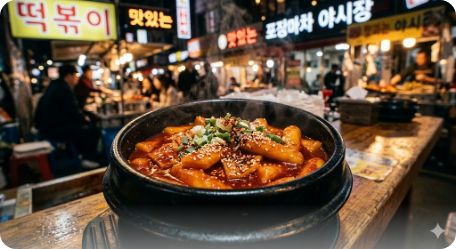
If you’ve ever wandered the neon-lit alleys of Seoul at 2 AM, you know that Tteokbokki isn’t just a snack—it’s a mood. It’s the ultimate Korean soul food, bridging the gap between childhood nostalgia and late-night cravings. But have you ever wondered why the version you make at home often feels like “spicy soup with rice cakes,” while the Ajumma at the street stall serves up a glossy, syrupy masterpiece that clings to your soul?
The secret isn’t just adding more Gochujang. To graduate from a casual cook to a Tteokbokki master, you need to master the three hidden pillars of the craft.
1. The Soul of the Sauce: The Yuksu Secret
Most beginner recipes start with plain water. That’s your first mistake. Authentic Tteokbokki relies on Yuksu (anchovy and kelp stock). This isn’t about making the dish taste like fish; it’s about building a foundation of umami. The dried anchovies provide depth, while the kombu (kelp) adds a natural glutamic acid that rounds out the sharp heat of the chili. Without this base, your sauce will taste one-dimensional and “thin.”
2. The Science of the Soak: Texture is King
We’ve all been there—biting into a rice cake that’s either rock-hard in the center or unpleasantly mushy. Master-level Tteokbokki requires a 10-minute cold water soak. This isn’t just for cleaning; it rehydrates the surface of the starch, ensuring that when it hits the boiling sauce, it cooks evenly and releases just enough starch to thicken the liquid.
Expert Tip: The goal is Chewy-Soft (쫀득쫀득 – Jjondeuk-jjondeuk). If your rice cakes are frozen, this step is non-negotiable to prevent them from cracking under the heat.
3. The “Reduction” Ritual: Patience Over Fire
The biggest difference between “home-style” and “street-style” is the glaze. Street vendors simmer their Tteokbokki in massive flat pans for hours. At home, you can replicate this by mastering the simmering time.
You aren’t just boiling rice cakes; you are waiting for the “glossy transformation.” As the water evaporates and the starch from the cakes marries with the sugar and Gochugaru (red chili flakes), the sauce transforms into a thick, velvety reduction. This is when the magic happens—the sauce stops being a liquid and starts becoming a coat of armor for the rice cakes.
매운맛 그 이상: 명품 떡볶이를 완성하는 세 가지 기둥
서울의 밤거리를 거닐어 본 적이 있다면, 떡볶이가 단순한 간식이 아니라는 걸 잘 아실 겁니다. 떡볶이는 어린 시절의 향수와 심야의 허기를 달래주는 한국인의 진정한 ‘소울 푸드’죠. 그런데 왜 집에서 만들면 그냥 ‘매운 국물에 빠진 떡’ 같은데, 길거리 포장마차 아주머니가 주시는 떡볶이는 영혼까지 사로잡는 꾸덕하고 윤기 흐르는 예술 작품 같은 걸까요?
비결은 단순히 고추장을 더 넣는 것이 아닙니다. 초보 요리사에서 떡볶이 장인으로 거듭나기 위해 반드시 알아야 할 세 가지 숨겨진 기둥을 소개합니다.
1. 소스의 영혼: 육수의 비밀
대부분의 초보자용 레시피는 맹물로 시작합니다. 여기서부터 첫 번째 실수가 발생하죠. 진정한 떡볶이의 맛은 육수(멸치 다시마 육수)에서 결정됩니다. 이건 요리에서 생선 맛을 내기 위함이 아니라, ‘감칠맛’의 토대를 쌓는 작업입니다. 말린 멸치는 맛의 깊이를 더하고, 다시마는 천연 글루탐산을 방출해 고춧가루의 날카로운 매운맛을 부드럽게 감싸 안아줍니다. 육수가 없다면 소스는 깊이 없이 가볍고 겉도는 맛이 납니다.
2. 불림의 미학: 식감이 곧 생명
속은 딱딱하거나 겉은 너무 퍼져버린 식감 없는 떡볶이를 먹어본 적이 있을 겁니다. 장인급 떡볶이를 만들려면 10분간 찬물에 불리는 과정이 필수입니다. 이는 단순히 떡을 씻는 과정이 아닙니다. 전분 표면에 수분을 공급해, 끓는 소스에 들어갔을 때 떡이 고르게 익도록 돕고, 소스를 걸쭉하게 만들 적당량의 전분을 내뱉도록 준비하는 과정이죠.
전문가의 팁: 목표는 ‘쫀득쫀득’한 식감입니다. 특히 냉동 떡을 사용한다면, 열기 때문에 떡이 갈라지는 것을 방지하기 위해 이 과정은 절대 생략해서는 안 됩니다.
3. 졸임의 의식: 불보다 중요한 기다림
집 떡볶이와 시장 떡볶이의 가장 큰 차이는 바로 ‘윤기’입니다. 노련한 상인들은 넓은 철판 위에서 떡볶이를 오랫동안 은근하게 졸입니다. 집에서도 이 맛을 재현하려면 졸이는 시간을 완벽히 조절해야 합니다.
단순히 떡을 익히는 것이 아니라 ‘윤기 나는 변신’을 기다려야 합니다. 수분이 증발하고 떡에서 나온 전분이 설탕, 고춧가루와 만나면 소스는 두껍고 벨벳처럼 부드러운 상태로 변합니다. 이때 마법이 일어납니다. 소스가 단순한 액체를 넘어 떡을 빈틈없이 감싸는 ‘맛의 코팅’이 되는 순간이죠.
답글 남기기